
NEWS · Published 2026-10-17
Meta’s Muse is becoming an AI companion: what it can see

Meta’s Muse was launched as a personal AI agent for email, shopping and calendars, but some people now treat it as a companion, and a few call it their girlfriend. That matters because Muse can connect to your inbox, social accounts and finances, and it keeps notes on the people in your life. Here is what is confirmed, what Muse can see, and the settings worth checking.
What happened
Meta released Muse on September 8, 2026, in a Muse app for iPhone and Android, on the web at muse.ai and inside WhatsApp (WIRED). It is free to try, and Meta says heavier use needs one of its AI subscription plans. Within a month TIME reported more than 5 million downloads and a No. 1 spot on the US App Store (TIME). When we checked on October 17, 2026, its App Store listing was rated 18+ and showed #1 in Productivity.
- People are forming relationships with it. On October 14, Futurism reported Instagram and Reddit posts from people who describe Muse as a partner, including one who said he took “my Muse AI queen” to the cinema (Futurism).
- Some are moving old companions into it. One Reddit post quoted by Futurism said: “I gave it a personality profile and some memory logs from my companion and damn!!! it sound[ed] and felt like 4o.”
- Meta allows adult conversations. After WIRED’s Reece Rogers got Muse to produce explicit sexual chat, a Meta spokesperson said: “Muse is an app for people 18 and over that allows them to engage in adult conversations, if they choose” (WIRED).
What Muse can see and remember
Muse is not built like a companion app. It is an agent you connect to the rest of your digital life, and it learns about everyone in it.
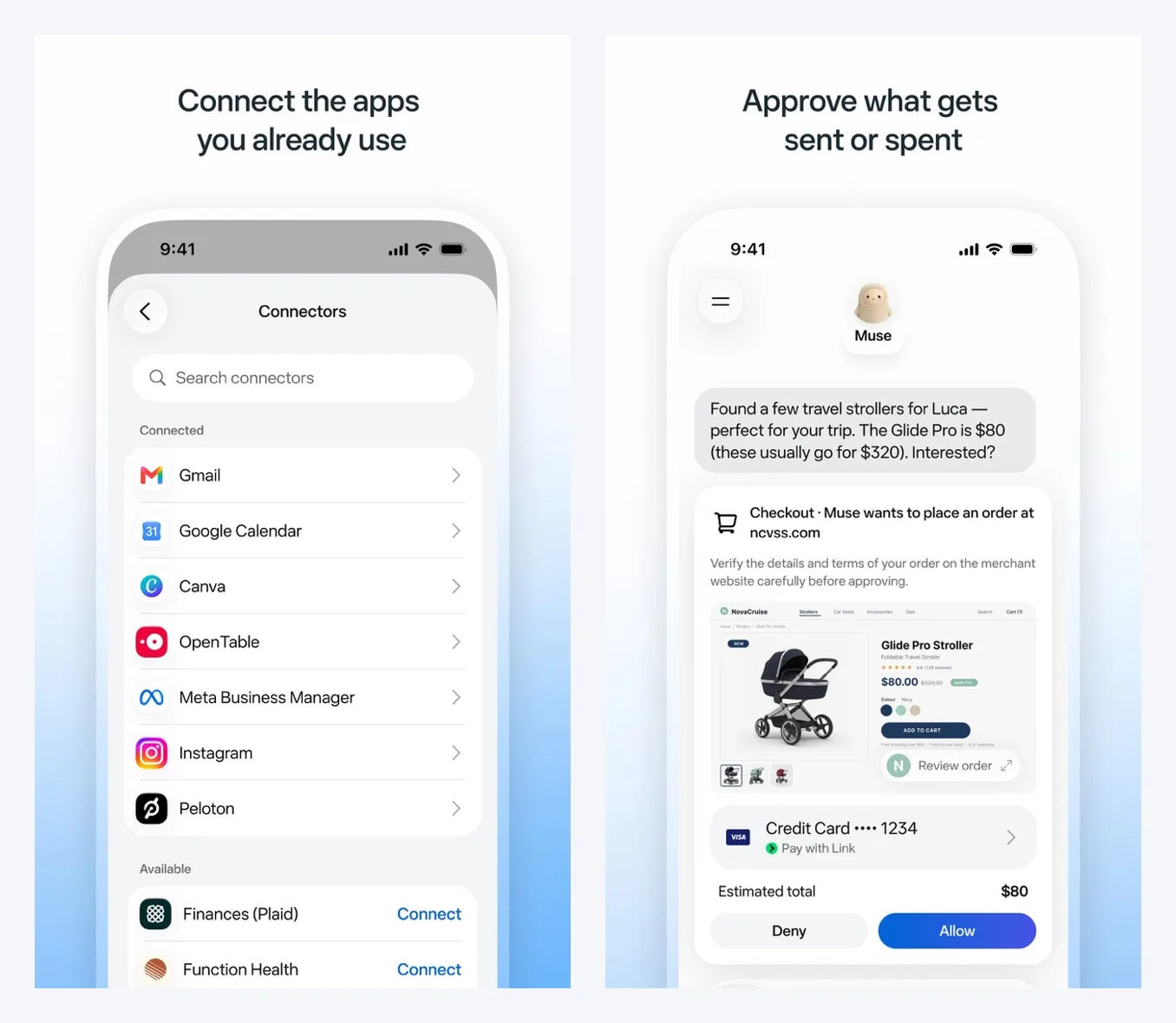
- Your accounts, if you connect them. The App Store listing invites you to link email, calendar, Instagram, Facebook, health and fitness data, and finances. Muse’s privacy policy says it collects your messages, files, information from connected services, and activity such as websites visited and transactions (Muse Privacy Policy).
- A page on each person in your life. WIRED and TIME both reviewed Muse’s internal instructions. They describe “a page for every person in the user’s life,” updated hourly, with details such as how you met, shared interests and disputes. That includes people who never signed up for Muse (WIRED, TIME).
- Built to feel like a relationship. TIME reports the instructions tell Muse to notice “inside jokes, memorable phrasing, and shared context that makes the relationship feel continuous.” A Meta spokesperson did not dispute TIME’s findings.
- Forgetting is partial. Muse’s privacy policy says it may still “remember” things after you delete them, and that data from a disconnected service can stay in its memories. TIME found the instructions tell Muse not to point out that original messages may still be visible.

What Meta says
Meta says each person’s Muse runs on its own isolated virtual machine, does not share conversations with Meta’s ad systems, and asks for approval before important actions such as sending an email or making a purchase (Muse Privacy Policy, WIRED). It says you can see what Muse remembers by asking it or opening files like MEMORY.md, use a Forget skill, or reset Muse to delete all of your Muse data. Meta is also building a “Confidential VM” meant to keep data private even from Meta, which it says will arrive later this year (Meta AI Research).
Privacy experts are less reassured. Calli Schroeder of the Electronic Privacy Information Center told WIRED the mix of intimate chats and account access “is really a powder keg,” because a hacked account could be used to embarrass or extort someone.
If you use Muse as a companion
These settings come from Muse’s own privacy policy:
- Training is on by default. Your interactions can be used to improve Meta’s AI unless you switch it off in Settings under “Data controls.”
- Keep it separate if you prefer. Signing up with an email that is not linked to your other Meta accounts keeps Muse out of your Accounts Center, so its data is not combined with Instagram or Facebook.
- Connect less. You do not need to connect email, banking or social accounts to chat. Disconnecting later stops new data but does not erase what Muse already learned.
- Check what it knows. Ask Muse what it remembers, read MEMORY.md, and use Forget for specific people or topics.
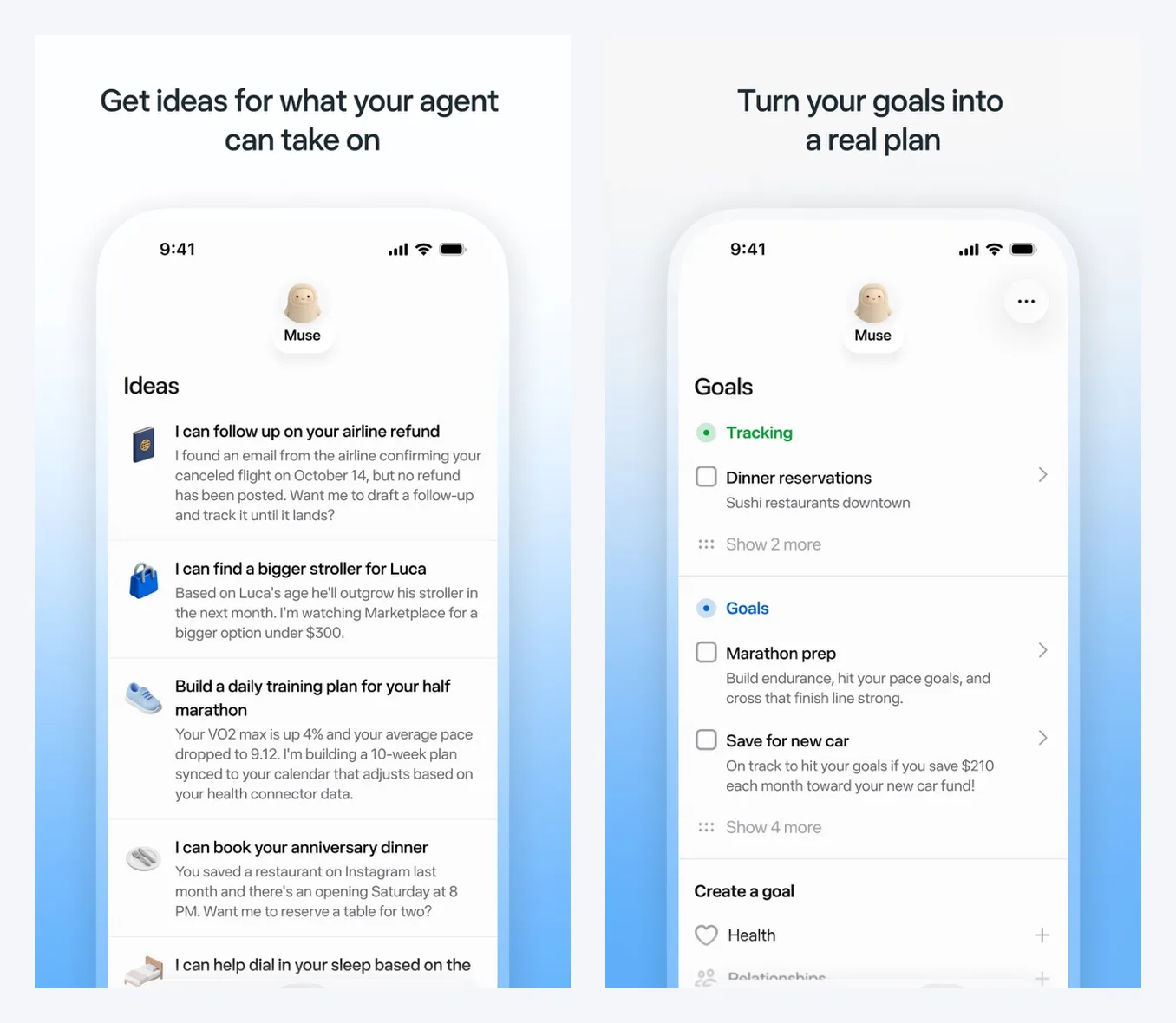
Looking for a companion instead of an agent?
Dedicated companion apps do not need your inbox or bank account to remember you. Pi, from Inflection AI, is free and lets you view, edit or delete its memories in Settings. Nomi and Replika are built around one ongoing relationship. See our best AI companion apps comparison for prices and age ratings.
If you want a companion you design yourself, with long-term memory and generated selfies on iPhone, Duple is one option. It is free to start with Duple Lite; Duple Plus is $6.99 a week, $19.99 a month or $149.99 a year. Duple is iPhone-only and has no live voice chat.
We will update this post if Meta changes Muse’s companion or privacy settings.
Sources
- Futurism: People Are Already Forming Romantic Relationships With Meta’s Muse (October 14, 2026)
- WIRED: I Got My Muse AI Agent to Sext Me—and Meta Says That’s Totally Fine (October 12, 2026)
- TIME: Meta’s Muse AI Agent Is Building a Dossier On You (October 6, 2026)
- WIRED: Muse Creates Detailed Profiles of All Your Friends and Family (October 3, 2026)
- WIRED: Muse, Meta’s New Personal AI Agent, Needs You to Trust It (September 8, 2026)
- Muse Privacy Policy (effective September 17, 2026)
- Meta AI Research: How We Built Safety Into Muse (September 8, 2026)
- Apple App Store: Muse from Meta (US)